How to find a healthy church
how to find a healthy church
…a checklist for the “church hurt”
How to Find a Healthy Church: A Checklist for the "Church Hurt"
Many people have contacted me after experiencing church hurt or religious trauma of some kind. One of the questions they often ask me is:
How do I find a GOOD church?
They thought their church was good… until it wasn’t. They feel burned and don’t want it to happen again. So what can they do to increase the odds of them finding a healthy church?
That may be your question as well. And so I’m going to list out for you some ideas that might help you find a good church to attend. Feel free to add your own suggestions in the comments.
It will take some work, but like with any long term commitment, the more you know up front, the better will be the relationship.
Finding a Healthy Church Checklist
1. Start by Asking God to lead your search
The Bible tells us that God orders our steps. Proverbs 3:6 says that if we acknowledge God in all our way that he will direct our paths. And in Isaiah 48:17 God says that he will lead us in the way we should go.
So trust that God wants you to find a healthy church community where your faith can grow and you can serve others. God made us to be in relationships, especially with other believers. So, seeking out a healthy church is a good thing to do. The trick is in finding one.
2. look for churches closest to you.
I say this because if you can find a church within walking distance, that would be ideal. It will enable you to be more involved and hopefully meet people in your neighborhood. Attending a church across town can work against you. It’s said that people are much more likely to workout if their gym is nearby. That holds for churches as well. You are more likely to engage in the community if you can walk there.
But I’m speaking of an ideal. In reality, people travel across town all the time to their church . It’s better to drive for a healthy church across town rather than settle for a toxic church nearby.
3. Determine if you are looking for a large church or a small church.
They both have their advantages and disadvantages. Small churches can be very personable with a strong relational/community vibe and pastoral care. But they might lack in high quality music, preaching, and ministry for youth and children. Large churches often excel in those areas but they can be impersonal and rigid, meaning that there isn’t a lot of flexibility because they have to manage a lot of people and can’t always be making exceptions. Small churches will give you easy access to the pastor, but in a larger church you might never have a conversation with the pastor.
4. Check the church out online.
You can learn a lot from a church website.
I often go to the Staff page first to see who is leading the church. For me, it’s important to see women in leadership as well as men. It helps if they list the training that the pastors have and any background information about them.
Next to the staff page is usually a statement of faith and values. Good things to know!
I also note the tone of what’s written on the website. Is it positive or negative? What’s emphasized?
If specific issues are important to you: social justice, LGBTQ affirming, evangelism, discipleship, missions, etc. you’ll want to make sure that’s noted on the website.
Is the church a part of a denomination or is it independent? Independent churches can be good but sometimes they lack oversight and accountability, which can become a problem. You should know this if you decide to get involved.
Past sermons are typically posted on websites so be sure to listen to a few of them to determine if the teaching is something that encourages you to know God. Are the sermons based on the Bible? Are they legalistic? Condemning? Intimidating? Or uplifting, practical and helpful?
5. Read the reviews.
When you search on google for a church there are often reviews posted by current or previous attenders. They can be biased. So take them with a grain of salt, but you might pick up on a theme, positive or negative, that is worth noting.
6. Talk to your friends about their churches.
They can give you good insight from their own perspective that’s worth considering. Plus, if you attend where you have friends, you get a jump on building your community.
7. visit the church with your eyes wide open.
What do you see? What do you hear? What’s emphasized?
Are you welcomed and engaged?
Are you made to feel like an outsider that doesn’t fit in?
Are there expectations to conform that are stated or implied that make you feel uncomfortable or is there a sense of freedom to be who you are?
How do they talk about money and volunteering?
Are the sermons based on the Bible and relevant to daily life?
Is knowing God the focus or is it a personality or the church that is the center of attention?
Is there a sense of obligation and guilt or do they have a low-key, low-pressure approach?
Is there true joy and even a sense of fun or is everyone very serious?
Do they take care of their facility or is it poorly cared for?
8. Attend the discovery class.
Most churches have a class that gives an overview of the church. Take advantage of this. You can learn a lot and don’t be afraid to ask tough questions that are important to
you.
How are finances handled?
Who makes decisions for the direction of the church?
What’s required for membership?
What are their views on tough topics like divorce and remarriage, women in ministry, sexuality, etc?
It’s worth the effort
This might sound like a lot of work! It is. But if you are looking to give your time and money to a church, you should do your due diligence to make sure it’s right for you.
I think a lot of “church hurt” today is the result of people being too trusting and assuming the best about a church from the beginning, only to be shocked when they see the dark side come out. A lot of hurt and disappointment can be avoided by doing your research in advance.
Go Slow
Once you’ve found a church that you like, “wade” into it slowly just to make sure that you don’t overcommit only to regret your decision later. When I pastored a church I always told people to wait six months before becoming a member just to make sure they were confident in their decision. Most people were surprised to hear this because they were used to being pressured to join, give and volunteer. I wanted people to know that we respected their decision making process and we didn’t want to manipulate them in any way.
What If I can’t find a good church?
Now… many people have told me that they can’t find a church in their area that they trust for various reasons. Maybe you are in that situation today. Can you be a “good Christian” and not attend church? I’ll address this in my next post, so check back to see what I have to say. Be sure to subscribe to make sure you don’t miss it.
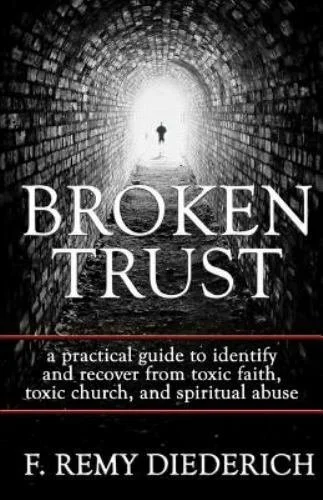
If you haven’t read my book, Broken Trust… a practical guide to identify and recover from toxic faith, toxic church and spiritual abuse, it might help you to discern what you DON’T want to see in a church.
Receive a free 23 page booklet: "The Bible In A Nutshell" when you subscribe.
Learn where the Bible came from, why you can trust it, a simple storyline, major themes, and how to read it.
Click the home page button above to discover all my books, blogs, videos, and coaching options to help you live a better life.